

Türkiye’s Logistics Sector: Strategic Pivot Between Continents and Emerging Global Hub
Türkiye’s logistics sector has evolved into one of the most dynamic and strategically significant components of its economy. Positioned at the crossroads of Europe, Asia, and the Middle East, the country leverages geography, infrastructure investments, and diversified transport capabilities to serve as a critical bridge in global supply chains. In recent years, the sector’s growth trajectory has accelerated despite macroeconomic pressures and regional geopolitical volatility. Türkiye continues to strengthen its aspiration to operate as a global logistics hub, capitalizing on multimodal transport corridors, an expanding manufacturing base, and digital transformation initiatives.
A Strategic Geographical Advantage
The country’s position on key east-west and north-south trade routes establishes a natural foundation for logistics competitiveness. Türkiye provides access to a market of over 1.3 billion consumers within a four-hour flight radius, encompassing the European Union, the Middle East, North Africa, the Balkans, and Central Asia. This proximity facilitates efficient supply chain operations for high-volume, time-sensitive, and multimodal freight flows.
The Turkish Straits, including the Bosporus and Dardanelles, are among the most significant maritime passages in global trade. Millions of tons of cargo pass through these narrow waterways annually, connecting Black Sea economies with Mediterranean and global shipping routes. Combined with the country’s extensive coastline and a growing port infrastructure, maritime transport remains a dominant mode, forming the backbone of international freight movement.
Infrastructure Expansion and Multimodal Connectivity
One of the defining characteristics of Türkiye’s logistics sector is the scale and consistency of infrastructure investment over the last two decades. Major initiatives have expanded port capacity, highway networks, railway corridors, and airport infrastructure.
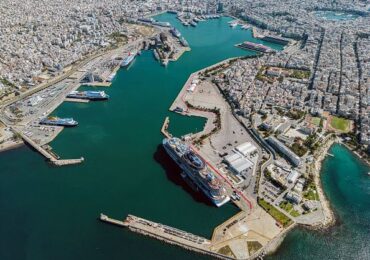
Port development is especially notable. Leading ports such as Ambarlı, Mersin, İzmir (Alsancak), Tekirdağ, and İskenderun have increased container handling capacity and attracted significant private-sector participation. Ongoing investments in Filyos Port and Çandarlı Port further extend the country’s competitive maritime footprint.
Railway modernization is another strategic priority. Türkiye has pursued an ambitious program of upgrading rail corridors, enhancing intermodal terminals, and integrating its network with the Trans-Caspian East-West-Middle Corridor (Middle Corridor). This initiative provides an alternative route between China and Europe that bypasses congested or politically sensitive areas. For manufacturers and third-party logistics providers, rail expansion supports cost-efficient, sustainable, and reliable long-distance freight movement.
Highway investments also remain substantial. Türkiye’s extensive highway network, which exceeds 70,000 kilometers, provides seamless domestic distribution and efficient cross-border connectivity with key trading partners.
Air Cargo Capacity and Global Reach
Istanbul Airport has rapidly become one of the world’s largest and most advanced aviation hubs. Its cargo terminals support high-value, temperature-controlled, and express shipments for sectors such as pharmaceuticals, textiles, electronics, and e-commerce. Turkish Cargo, one of the fastest-growing air freight operators globally, expands Türkiye’s role in long-haul logistics and strengthens the country’s integration with global freight networks.
Growth of the Logistics Services Market
The logistics services market in Türkiye is broad and diversified. Large domestic providers, multinational 3PL operators, freight forwarders, warehousing firms, and specialized transport companies coexist in a competitive environment. Demand is driven by industrial production, export-oriented manufacturing, e-commerce expansion, and supply chain outsourcing trends.
Sectors with the highest logistics intensity include automotive, machinery, textiles and apparel, chemicals, agrifood commodities, and fast-moving consumer goods. The continued shift toward supply chain digitalization—particularly warehouse automation, real-time tracking, and data-driven route optimization—has further modernized the market and improved service quality.
E-commerce and New Supply Chain Dynamics
The rapid rise of e-commerce has reshaped the logistics landscape in Türkiye. Domestic online retail penetration has increased significantly, prompting investment in last-mile distribution networks, fulfillment centers, dark stores, and micro-warehouses. Major platforms and retailers have established large-scale logistics hubs near Istanbul, Ankara, and Izmir to meet demand for rapid delivery.
Courier, express, and parcel (CEP) services have expanded, while customer expectations for same-day and next-day delivery have transformed the operating models of logistics providers. This shift creates new opportunities but also intensifies competition, particularly around network efficiency and digital capability.
Policy Framework and Trade Facilitation
Government strategies emphasize trade facilitation, customs modernization, and digital platforms that streamline freight processes. Initiatives such as the Single Window System, expansion of free trade zones, and customs data integration support faster and more transparent operations. Türkiye’s logistics ambitions are aligned with broader economic policy objectives, including export diversification, industrial competitiveness, and deeper global market integration.
Challenges and Structural Constraints
Despite strong growth, the sector faces several challenges:
• Macroeconomic volatility affects investment decisions, operational costs, and long-term planning.
• Fuel price fluctuations impose margin pressure, especially for transport-intensive operators.
• Regulatory complexity and cross-border administrative burdens can slow freight flows.
• Limited adoption of advanced digital tools among some SMEs reduces overall sector efficiency.
• Capacity bottlenecks can arise during peak trade seasons, particularly at major ports and urban distribution nodes.
Addressing these constraints is essential for enhancing competitiveness and maintaining sector resilience.
Future Outlook and Strategic Opportunities
Türkiye’s logistics sector is expected to continue expanding, driven by structural factors such as manufacturing growth, export orientation, and regional trade integration. Three areas present significant opportunity:
Multimodal logistics hubs linking ports, rail terminals, and industrial zones.
Digital and green logistics solutions, including route optimization, sustainable fuels, and carbon-efficient warehousing.
Regional corridor leadership, leveraging Türkiye’s role in the Middle Corridor and emerging Eurasian logistics alliances.
With continued investment, regulatory modernization, and technological adoption, Türkiye is well positioned to strengthen its role as a central logistics gateway between continents and a critical enabler of regional and global trade.