
Greece’s Logistics Sector: A Strategic Gateway for Europe, Southeast Europe, and the Eastern Mediterranean
Greece’s logistics sector has undergone significant transformation over the past decade, establishing the country as a regional logistics gateway linking Europe, Asia, and the Eastern Mediterranean. Driven by port modernization, infrastructure upgrades, and the strengthening of third-party logistics services, the Greek logistics industry is progressively aligning with international standards and enhancing its strategic role in global supply chains. Despite structural challenges and economic fluctuations, Greece continues to consolidate its position as a key transit and distribution hub for Southeast Europe and the European Union.
Strategic Geographical Positioning
Greece occupies one of the most advantageous geostrategic positions in Europe. Located at the intersection of EU markets, the Balkans, North Africa, and the Middle East, the country functions as a natural entry point for goods moving between Asia and Europe. The Mediterranean shipping routes, which handle a substantial portion of global container traffic, place Greek ports in a pivotal role for transshipment and intermodal distribution.
The proximity to the Suez Canal enhances Greece’s relevance in east-west trade flows. As shipping lines seek efficient and resilient gateways into European markets, the country’s ports—particularly Piraeus—have become indispensable nodes in global maritime networks. This geographic advantage supports Greece’s long-term logistics competitiveness and forms the foundation for multimodal freight connectivity.
Port Infrastructure and Maritime Leadership
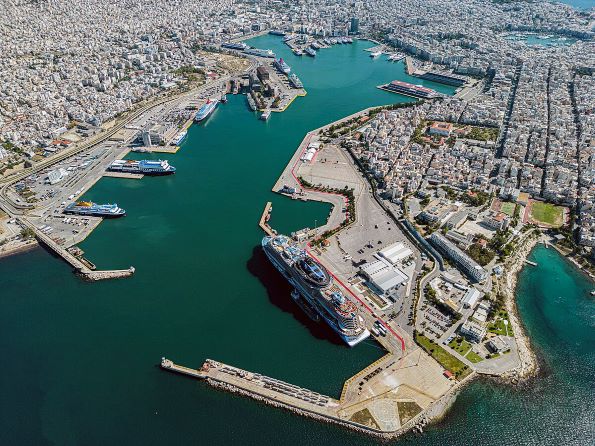
Maritime transport is the backbone of Greek logistics. The Port of Piraeus stands out as one of Europe’s fastest-growing container ports, consistently ranking among the top three busiest EU ports in container throughput. Its rapid expansion is supported by significant private investment, modernization of terminal operations, and integration into major shipping alliances.
Beyond Piraeus, ports such as Thessaloniki, Patras, Heraklion, Igoumenitsa, Kavala, and Alexandroupolis are being upgraded to strengthen regional intermodal connections. Thessaloniki, in particular, acts as a gateway for the Balkans, serving landlocked Central and Southeast European countries through road and rail corridors.
The strategic role of smaller regional ports also continues to grow, especially as part of Greece’s Blue Economy initiatives and EU corridor development strategies.
Road, Rail, and Multimodal Connectivity
Over the last 15 years, Greece has invested heavily in transport infrastructure, leading to one of the most modern highway networks in Southeast Europe. Highways such as Egnatia Odos, Olympia Odos, Ionia Odos, and Attiki Odos provide efficient domestic distribution and strong cross-border links with Albania, North Macedonia, and Bulgaria.
Railway modernization, although progressing more slowly than in other EU countries, is a central pillar of Greece’s logistics development agenda. Current efforts focus on electrification, signaling upgrades, and improving freight corridors that connect ports with inland logistics hubs. The development of the Thriassio Logistics Center and other intermodal nodes is expected to enhance rail freight share and reduce reliance on road transport.
While challenges remain in rail network capacity and operational reliability, Greece’s long-term strategy aims to reposition rail as a viable, sustainable, and cost-efficient solution for regional freight movement.
Growth of the Logistics Services Market
The logistics services market in Greece has expanded in sophistication and scale. Third-party logistics providers (3PLs), freight forwarders, warehouse operators, CEP companies, and specialized distribution firms now serve a wide range of industries including retail, FMCG, pharmaceuticals, food and beverages, construction materials, and consumer electronics.
Greece’s gradual shift toward supply chain outsourcing and the adoption of digital solutions—such as advanced warehouse management systems, IoT-enabled fleet monitoring, and automated distribution processes—have significantly improved sector capabilities. Market consolidation trends are also emerging, with larger players increasing their market share and investing in modern logistics parks.
E-commerce Growth and Last-Mile Transformation
The rapid rise in e-commerce has fundamentally changed the logistics landscape in Greece. Online retail penetration has expanded steadily, accelerated by consumer behavioral shifts and the increasing digitalization of businesses. As a result, demand for last-mile delivery, fulfillment services, and returns management has surged.
Courier, express, and parcel (CEP) operators have invested in automated sorting centers, micro-hubs, and upgraded domestic distribution networks to meet expectations for faster and more reliable deliveries. Regional logistics centers near Athens and Thessaloniki are increasingly equipped with robotics, automated storage systems, and real-time delivery tracking tools.
This transformation is driving innovation, competition, and new logistics partnerships across the Greek economy.
Policy Environment and EU-Driven Modernization
Greece’s logistics evolution is closely linked to EU transport, digitalization, and green transition policies. Key priorities include trade facilitation, customs simplification, multimodal corridor integration, and emissions reduction across the transport sector.
The digital transformation of customs and the modernization of free zones aim to streamline freight flows and support international trade. Investments through the EU’s Connecting Europe Facility (CEF), the Recovery and Resilience Facility (RRF), and Cohesion Funds continue to improve network connectivity and logistics infrastructure resilience.
Green logistics initiatives are gaining traction as companies aim to reduce their carbon footprint through energy-efficient warehousing, electrified fleets, alternative fuels, and carbon-optimized distribution models.
Challenges and Structural Constraints
Despite rapid modernization, the Greek logistics sector still faces several constraints:
• Rail reliability and limited intermodal capacity reduce competitiveness in long-distance freight.
• Urban congestion in major cities increases last-mile costs and delivery delays.
• Fragmented warehouse stock and limited availability of Class-A logistics facilities restrict scalability.
• Administrative complexity in customs, permitting, and investment approvals can slow business operations.
• Energy and fuel cost volatility continues to put pressure on logistics operators.
Addressing these issues is essential for reinforcing Greece’s role within regional supply chains.
Future Outlook and Strategic Opportunities
Greece is well positioned to strengthen its logistics competitiveness over the coming decade. Three strategic areas offer particularly strong potential:
-
Development of integrated logistics hubs that combine warehousing, intermodal terminals, and value-added services.
-
Acceleration of rail freight modernization to support sustainable, EU-aligned logistics operations.
-
Expansion of e-commerce infrastructure and advanced last-mile delivery technologies.
Additionally, Greece’s ambition to serve as a key energy logistics hub—including LNG, electricity interconnections, and hydrogen corridors—adds a new dimension to its logistics profile.
As global supply chains seek resilience, diversification, and alternative routing options, Greece offers a unique combination of strategic location, modernizing infrastructure, and growing logistics expertise. Continued investment, regulatory reform, and technology adoption will be critical to fully unlocking the sector’s long-term potential.